
Heavy Periods Treatment in Chennai: Causes, Symptoms & Expert Gynaecologist Care
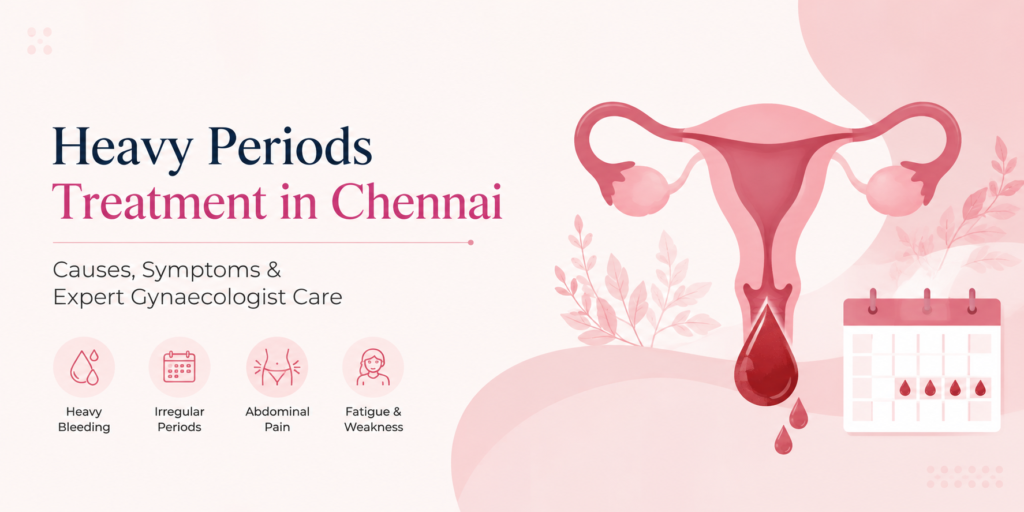
Heavy Periods or Abnormal Bleeding? When Should You Consult a Gynaecologist?
Many women brush off heavy periods as a routine inconvenience. Here's how to tell when it's actually a sign of something that needs attention — and what treatment can look like.
Periods are a natural part of a woman's reproductive health. However, experiencing very heavy bleeding, prolonged periods, or irregular bleeding is not always normal and may indicate an underlying gynaecological condition.
Many women ignore heavy periods thinking they are a routine issue, but excessive menstrual bleeding can affect physical health, emotional well-being, and daily activities. Consulting an experienced gynaecologist can help identify the cause and provide effective treatment options.
What is heavy menstrual bleeding?
Heavy menstrual bleeding, medically known as menorrhagia, refers to excessive bleeding during periods that interferes with normal life. Bleeding may be considered abnormal when it goes beyond the usual pattern.
Periods lasting 7+ days
Bleeding that runs longer than a week.
Frequent pad changes
Needing to change protection every hour or two.
Large blood clots
Passing large clots regularly.
Disrupted daily life
Bleeding that affects work, sleep, or routine activities.
Signs your period bleeding may be excessive
Many women underestimate the severity of their bleeding. Some warning signs include:
1. Changing sanitary products frequently
If you need to change pads or tampons every hour or two, it may indicate heavy bleeding.
2. Passing large blood clots
Frequent or large clots during menstruation may require medical evaluation.
3. Long-lasting periods
Bleeding that continues beyond a week should not be ignored.
4. Feeling tired or weak
Heavy bleeding can lead to iron deficiency and anaemia, causing fatigue, dizziness, low energy, and shortness of breath.
5. Severe period pain
Heavy bleeding combined with intense cramps may be associated with conditions like fibroids, endometriosis, or adenomyosis.
Common causes of heavy periods
Heavy periods can occur due to several gynaecological conditions.
Uterine fibroids
One of the common causes of heavy menstrual bleeding — may cause increased blood flow, pelvic pressure, pain, and fertility concerns. Treatment depends on fibroid size, location, and symptoms.
Endometriosis
Can cause severe period pain, heavy bleeding, pelvic discomfort, and fertility problems. Advanced laparoscopic evaluation may be required in selected cases.
Adenomyosis
Occurs when tissue similar to the uterine lining grows into the muscular wall of the uterus — causing heavy periods, painful menstruation, an enlarged uterus, and pelvic discomfort.
Hormonal imbalance
Changes in hormones can affect the menstrual cycle, causing irregular periods, heavy bleeding, and delayed periods.
Polycystic Ovary Syndrome (PCOS)
May cause irregular ovulation, leading to abnormal menstrual bleeding patterns.
Problems related to the uterine lining
Conditions affecting the endometrium may result in abnormal bleeding and require evaluation.
Pregnancy-related causes
In some cases, abnormal bleeding may be related to pregnancy complications and requires immediate medical attention.
When should you visit a gynaecologist for heavy periods?
You should consult a gynaecologist if:
- Your periods are becoming heavier over time
- Bleeding lasts more than 7 days
- You experience severe cramps
- You feel weak or exhausted during periods
- You pass large clots
- Your periods affect your daily routine
- You have bleeding after menopause
Early diagnosis can help identify the cause and prevent complications.
How is abnormal uterine bleeding diagnosed?
A detailed evaluation helps determine the reason behind heavy bleeding.
Medical history
Menstrual pattern, duration of bleeding, pain symptoms, previous pregnancies, medical conditions, and family history.
Pelvic examination
A physical examination may help identify abnormalities.
Ultrasound scan
Helps evaluate uterus size, fibroids, ovarian problems, and endometrial thickness.
Blood tests
May check haemoglobin levels, hormonal factors, and other medical conditions.
Hysteroscopy
Operative hysteroscopy allows the doctor to examine the inside of the uterus and treat certain conditions — helping diagnose polyps, submucosal fibroids, and abnormal growths.
Treatment options for heavy periods
Treatment depends on age, cause of bleeding, severity, fertility plans, and overall health.
Medication
- Medicines to reduce bleeding
- Hormonal medications
- Pain management options
- Iron supplements if anaemia is present
Hysteroscopic treatment
If abnormal growths are present inside the uterus, hysteroscopy may allow diagnosis and treatment without major surgery.
- Minimally invasive procedure
- Faster recovery
- Accurate diagnosis
Laparoscopic surgery
For conditions such as fibroids, endometriosis, and ovarian cysts.
- Smaller incisions
- Less pain
- Faster recovery
- Better cosmetic results
Laparoscopic hysterectomy
- For women who have completed their family and have severe symptoms
- Uterus removal surgery considered in selected cases
- Decision personalised after discussing all available options
Can heavy periods affect fertility?
The impact depends on the underlying cause. Conditions like fibroids, endometriosis, adenomyosis, and hormonal disorders may sometimes affect fertility. Women planning pregnancy should consult an experienced obstetrician and gynaecologist for evaluation.
Why choose Dr. Shruthi Sreedhar for abnormal bleeding treatment?
Dr. Shruthi Sreedhar is a highly qualified Obstetrician and Gynaecologist with:
Her expertise includes:
- Abnormal uterine bleeding management
- Fibroid treatment
- Endometriosis treatment
- Laparoscopic surgery
- Hysteroscopy
- Infertility management
- Pregnancy care
- Preventive women's health
Patients receive comprehensive evaluation and personalised treatment plans built around their individual needs.
Frequently Asked Questions About Heavy Periods
1. What is considered a heavy period?+
Periods requiring frequent pad changes, lasting longer than 7 days, or affecting daily activities may be considered heavy.
2. Are heavy periods normal?+
Occasional changes may happen, but persistent heavy bleeding should be evaluated by a gynaecologist.
3. Which doctor treats heavy periods in Chennai?+
A qualified Obstetrician and Gynaecologist can diagnose and treat abnormal uterine bleeding.
4. Can fibroids cause heavy periods?+
Yes. Fibroids are one of the common causes of excessive menstrual bleeding.
5. Do heavy periods require surgery?+
Not always. Treatment depends on the cause, symptoms, age, and fertility plans.
Consult the Best Gynaecologist in Chennai for Heavy Periods Treatment
Heavy bleeding should not be considered something you simply have to tolerate. If you are experiencing painful, prolonged, or excessive periods, expert evaluation can help identify the cause and provide the right treatment.
Dr. Shruthi Sreedhar at Ojas Clinic Chennai offers advanced diagnosis and treatment for menstrual problems, fibroids, endometriosis, and other gynaecological conditions.
Book your consultation today for personalised women's healthcare in Chennai.
This article is for general information and does not replace a consultation with a qualified gynaecologist.