

Adenomyosis Surgery in Chennai: When Is Laparoscopic Treatment Needed?
Understanding adenomyosis, its symptoms, and when surgical treatment may be recommended.
Painful periods and heavy menstrual bleeding are common symptoms experienced by many women. While several gynecological conditions can cause these symptoms, one possible cause is adenomyosis.
Adenomyosis can affect quality of life and may cause persistent pelvic pain, heavy bleeding and severe menstrual cramps. Treatment depends on the severity of symptoms, age, overall health and future pregnancy plans.
For some women whose symptoms do not improve with conservative treatment, surgical management may be considered.
What Is Adenomyosis?
Adenomyosis occurs when tissue similar to the lining of the uterus is found within the muscular wall of the uterus.
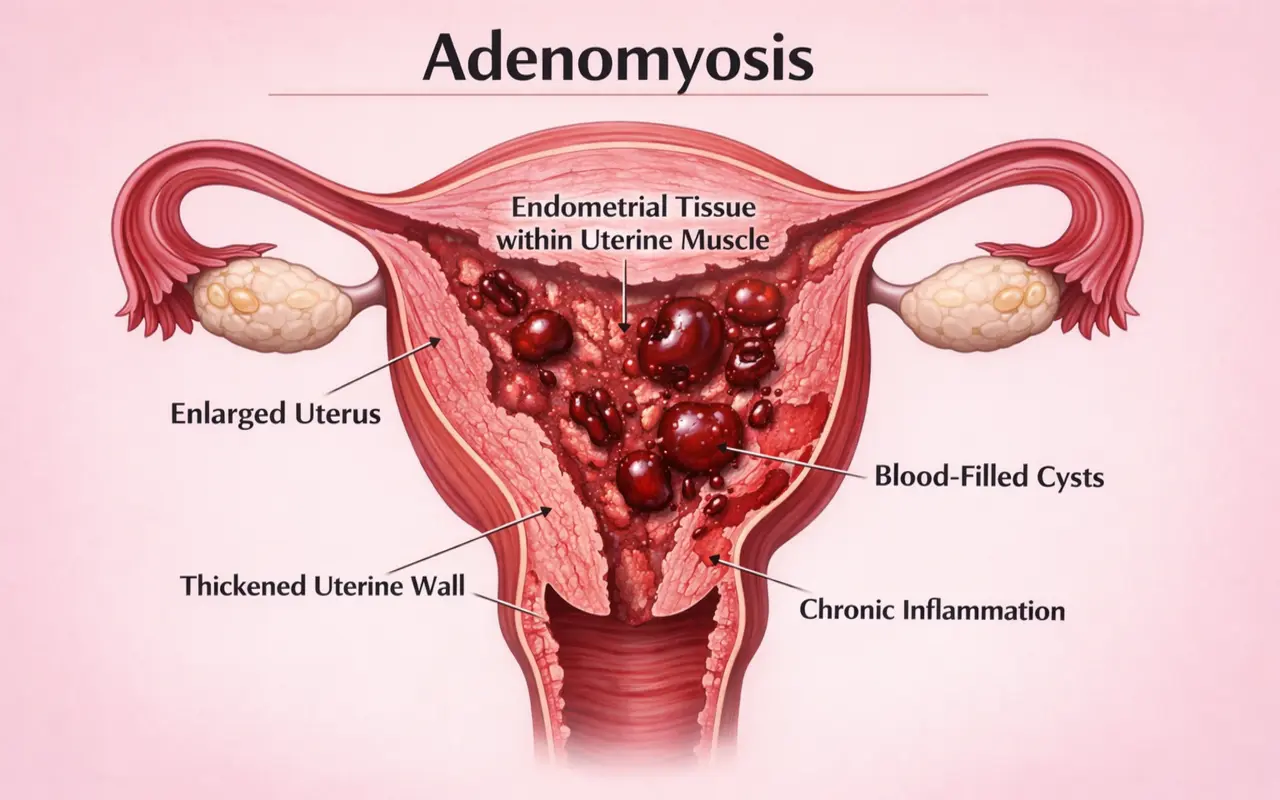
This can cause the uterus to become enlarged and may contribute to painful and heavy menstrual periods.
The condition is different from endometriosis, although both conditions may cause pelvic pain and sometimes occur together.
Common Symptoms of Adenomyosis
Symptoms can vary significantly from one woman to another.
Common symptoms may include:
- Heavy menstrual bleeding
- Painful periods
- Chronic pelvic pain
- Pelvic pressure
- Blood clots during menstruation
- Pain during intercourse in some cases
- Anaemia related to prolonged heavy bleeding
Some women may have adenomyosis without significant symptoms.
How Is Adenomyosis Diagnosed?
Diagnosis usually begins with a detailed discussion of symptoms and a gynecological examination.
Investigations may include imaging such as ultrasound or MRI when clinically appropriate. In some cases, adenomyosis may be difficult to distinguish from other uterine conditions without detailed evaluation.
Because several conditions can cause heavy bleeding and pelvic pain, obtaining an accurate diagnosis is important before treatment is planned.
Can Adenomyosis Be Treated Without Surgery?
Yes. Depending on the symptoms and individual circumstances, non-surgical treatment may be considered first.
Treatment options may include:
- Pain-relieving medication
- Hormonal treatment
- Hormonal intrauterine devices
- Other medical approaches depending on the patient
The appropriate treatment depends on the severity of symptoms and whether the patient wishes to preserve fertility.
When Is Adenomyosis Surgery Considered?
Surgery may be discussed when symptoms significantly affect daily life or when conservative treatment has not provided adequate relief.
Surgical treatment may also be considered based on:
- Severe or persistent heavy menstrual bleeding
- Chronic pelvic pain
- Significant impact on quality of life
- Coexisting gynecological conditions
- Individual reproductive plans
The choice of surgery must always be personalised.
What Surgical Options Are Available?
The appropriate procedure depends on the extent of the disease and the patient's individual circumstances.
Hysterectomy
For women who have completed their families and have severe symptoms that do not respond to other treatments, hysterectomy may be considered.
A hysterectomy involves surgical removal of the uterus.
Depending on the patient's medical condition and surgical assessment, a minimally invasive laparoscopic approach may be possible.
Fertility-Preserving Surgery
In selected cases, conservative surgical approaches may be considered for women who wish to preserve their uterus.
However, the suitability and expected outcomes depend on the pattern and extent of adenomyosis. A specialist assessment is essential.
Can Adenomyosis Be Treated With Laparoscopic Surgery?
Laparoscopic surgery may be used for certain gynecological procedures associated with adenomyosis.
The suitability of a minimally invasive approach depends on:
- The severity of symptoms
- The size and characteristics of the uterus
- Associated conditions such as fibroids or endometriosis
- Previous surgical history
- The planned surgical procedure
An experienced gynecological surgeon can explain whether laparoscopic surgery is appropriate for an individual patient.
Benefits of Minimally Invasive Gynecological Surgery
When suitable, laparoscopic surgery may involve small incisions and specialised instruments.
Potential advantages may include:
- Smaller surgical incisions
- Reduced visible scarring
- Less tissue trauma
- A potentially shorter recovery period compared with some open procedures
However, all surgical procedures involve potential risks. Patients should understand the benefits, alternatives and possible complications before surgery.
Recovery After Adenomyosis Surgery
Recovery depends on the type of procedure performed.
After surgery, patients receive individual guidance regarding:
- Pain management
- Physical activity
- Wound care
- Returning to work
- Follow-up appointments
Recovery timelines can differ significantly between individuals.
Choosing the Right Treatment for Adenomyosis
There is no single treatment suitable for every woman with adenomyosis.
The right treatment depends on the severity of symptoms, response to previous treatment and future reproductive plans.
Women experiencing persistent heavy bleeding or severe period pain should seek a detailed gynecological evaluation rather than self-diagnosing their symptoms.
Adenomyosis Treatment in Chennai
At Ojas Health in Royapettah, Chennai, women can receive an individual assessment for symptoms such as heavy periods and chronic pelvic pain.
Dr. Shruthi Sreedhar, Obstetrician, Gynecologist and Laparoscopic Surgeon, evaluates gynecological conditions and discusses appropriate medical and surgical treatment options based on each patient's needs.
Frequently Asked Questions
-
Does adenomyosis always require surgery?
No. Many women can be managed with non-surgical treatment. Surgery is considered based on symptoms and individual circumstances.
-
Can adenomyosis cause heavy periods?
Yes. Heavy or prolonged menstrual bleeding can occur in women with adenomyosis.
-
Is laparoscopic surgery possible for adenomyosis?
Depending on the planned procedure and individual clinical factors, a laparoscopic approach may be considered.
-
Should severe period pain be investigated?
Persistent or severe period pain should be evaluated by a qualified gynecologist because several conditions can cause similar symptoms.
Book a Consultation
If heavy periods or pelvic pain are affecting your quality of life, consult Dr. Shruthi Sreedhar at Ojas Health in Chennai for an appropriate diagnosis and discussion of medical or surgical treatment options.
Book a Consultation