
Laparoscopic Tubectomy in Chennai: Permanent Family Planning Surgery Explained
Choosing a permanent method of contraception is an important personal and medical decision. For women who are certain that they do not want future pregnancies, tubectomy may be considered as a permanent family planning option.
Permanent Decision
Tubectomy is intended to provide permanent contraception and should be considered carefully.
Laparoscopic Technique
Laparoscopic surgery uses small abdominal incisions and specialised instruments.
Personalised Consultation
Suitability depends on individual medical history and future reproductive plans.
What Is Tubectomy?
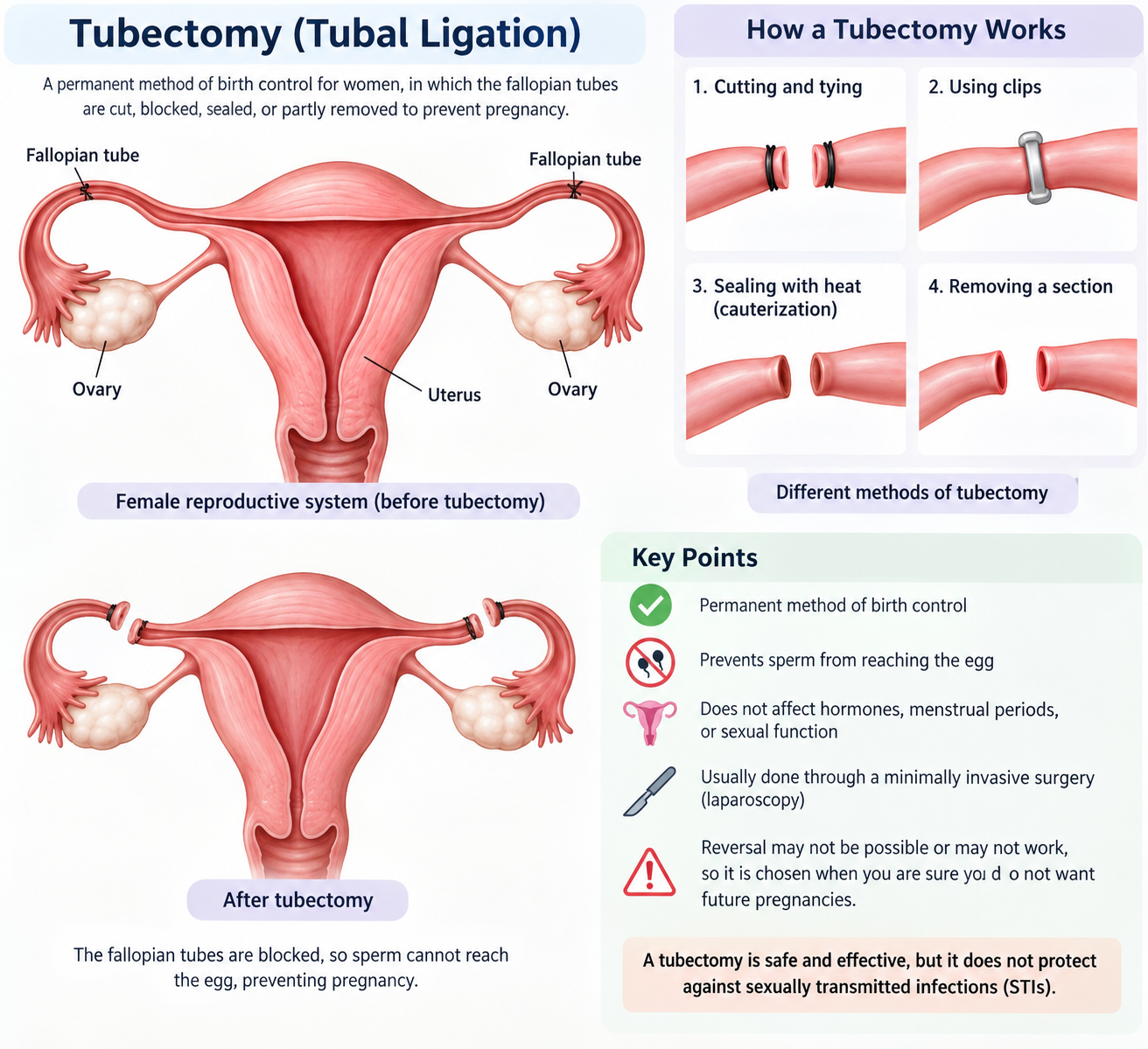
Tubectomy, also known as female sterilisation or tubal ligation, is a surgical method of permanent contraception.
The procedure involves blocking, sealing or interrupting the fallopian tubes to prevent the meeting of sperm and egg.
Important to Know
Because tubectomy is intended to be permanent, women should carefully consider their future reproductive plans before undergoing the procedure.
Who May Consider Permanent Family Planning Surgery?
Tubectomy may be considered by women who are confident that they have completed their planned family and want a permanent method of contraception.
Certain About Future Pregnancy
Women who are certain they do not want future pregnancies may discuss permanent contraception with their doctor.
Completed Planned Family
Tubectomy may be considered by women who feel their family is complete.
Want Permanent Contraception
It may be an option for women who prefer not to use temporary or long-term reversible contraception.
Discussed Alternatives
A qualified healthcare professional can explain reversible contraceptive alternatives before surgery.
Why Is Consultation Important?
Individual circumstances and reproductive goals can change over time. A detailed consultation helps women understand the permanent nature of sterilisation and make an informed decision.
What Is Laparoscopic Tubectomy?
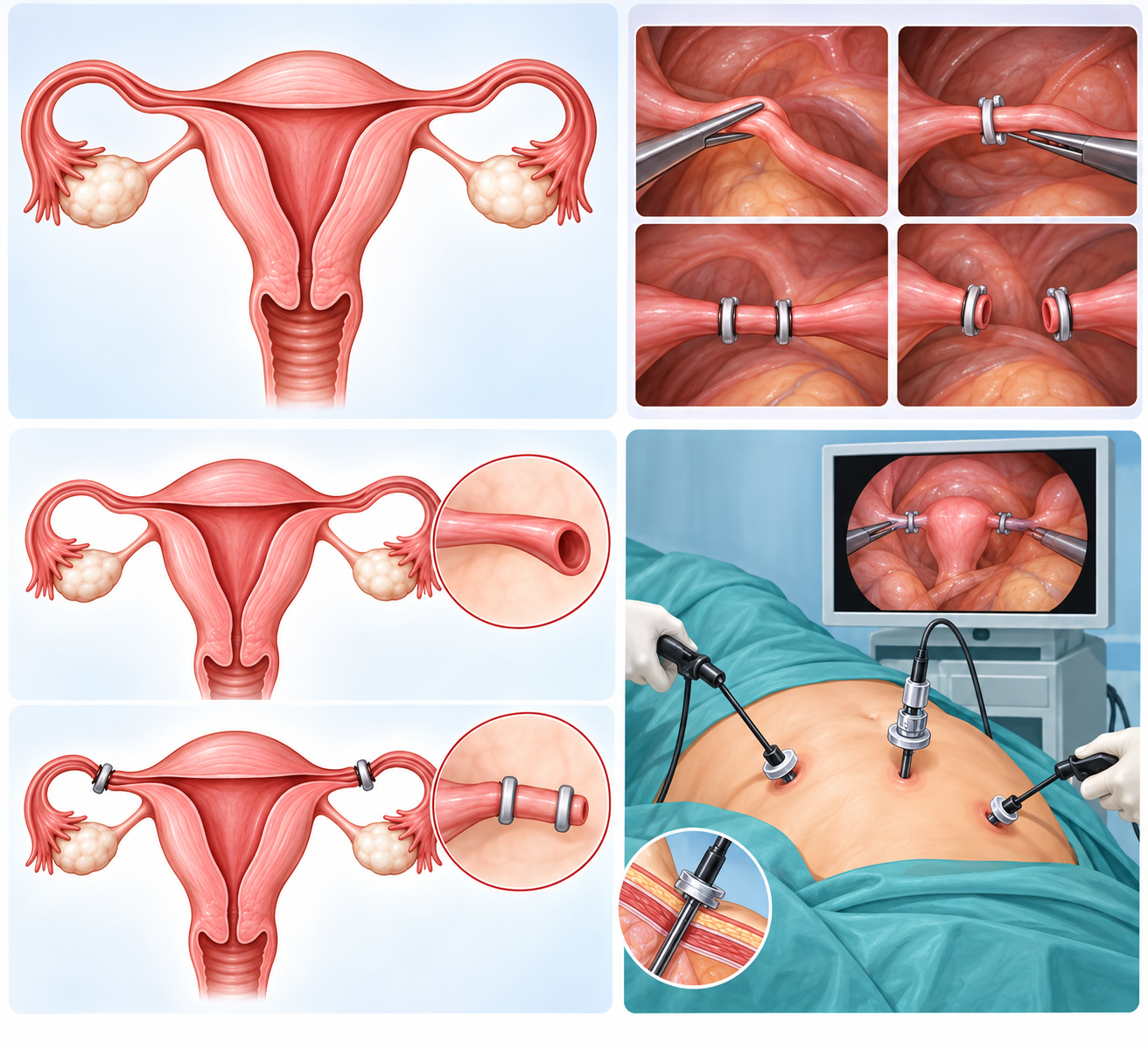
Laparoscopic tubectomy is a minimally invasive approach to female sterilisation.
The procedure generally involves small incisions in the abdomen through which a camera and specialised surgical instruments are inserted.
The fallopian tubes are then treated using the appropriate surgical technique.
How Does the Procedure Work?
During laparoscopic surgery, the surgeon uses a camera and specialised instruments inserted through small abdominal incisions. The fallopian tubes are then blocked, sealed or otherwise interrupted according to the surgical technique selected.
The exact procedure may vary based on the patient's medical condition and the surgeon's assessment.
Benefits of a Laparoscopic Approach
When laparoscopic surgery is suitable, it may offer benefits commonly associated with minimally invasive procedures.
Smaller Incisions
Laparoscopic surgery generally uses small abdominal incisions.
Less Visible Scarring
Smaller incisions may result in less visible surgical scars.
Reduced Tissue Trauma
Minimally invasive techniques may reduce tissue disruption.
Potentially Quicker Recovery
Recovery may be quicker compared with some open procedures.
Every Surgery Has Potential Risks
Every surgical procedure carries potential risks, and individual outcomes can vary. Your gynecologist can explain the potential benefits and risks based on your health and the planned procedure.
Is Tubectomy Immediately Effective?
The effectiveness and timing of contraception after a sterilisation procedure depend on the specific technique and clinical circumstances.
Patients should follow their surgeon's instructions regarding post-procedure contraception and sexual activity.
A healthcare professional can explain what to expect based on the procedure performed.
Is Tubectomy Reversible?
Tubectomy should be considered a permanent method of contraception. Although reversal procedures may sometimes be attempted in selected situations, reversal is not always possible and does not guarantee pregnancy.
Why Should Permanence Be Considered Carefully?
Future circumstances can change. Changes in personal circumstances, relationships or family plans may lead some women to reconsider their reproductive goals.
- Discuss whether you are certain about avoiding future pregnancy.
- Understand that reversal may not be possible or successful.
- Ask about long-acting reversible contraception if you are uncertain.
Alternatives to Permanent Female Sterilisation
Women who are uncertain about permanent contraception may wish to discuss reversible options with a qualified healthcare professional.
Intrauterine Devices
Hormonal Implants
Hormonal Methods
Barrier Methods
Long-Acting Reversible Options
Which Option Is Most Suitable?
The most suitable method depends on medical history, lifestyle, individual medical suitability and future pregnancy plans.
What Happens Before Laparoscopic Tubectomy?
Before surgery, the doctor will review your medical and reproductive history and discuss the procedure with you.
Medical Assessment
- Medical history
- Previous surgeries
- Current medications
- Pregnancy status
- Contraceptive history
Family Planning Discussion
- Future reproductive plans
- Permanent nature of sterilisation
- Alternative contraceptive options
- Possible surgical risks
- Expected recovery process
Individual Medical Assessment
Suitability for laparoscopic surgery should be determined by a qualified gynecologist after considering the patient's individual medical history and circumstances.
Recovery After Laparoscopic Tubectomy
Recovery varies between patients. Some women may experience temporary discomfort, bloating or fatigue after the procedure.
The treating doctor will provide specific instructions regarding:
- Rest and physical activity
- Wound care
- Medication
- Returning to work
- Follow-up appointments
Patients should seek medical advice if they experience concerning symptoms during recovery.
Important Considerations Before Choosing Tubectomy
Permanent contraception is a significant decision. Before undergoing tubectomy, women should be certain about their decision and discuss the available options with a qualified healthcare professional.
- Future family plans
- Alternative contraceptive methods
- The permanent nature of the procedure
- Possible surgical risks
- The expected recovery process
Why Talk to a Gynecologist?
A consultation with an experienced gynecologist can help patients understand the available choices and make an informed decision based on their individual circumstances.

Laparoscopic Tubectomy in Chennai at Ojas Health
Dr. Shruthi Sreedhar · Obstetrician & GynecologistWomen considering permanent family planning can seek an individual consultation to understand whether tubectomy is appropriate for them.
At Ojas Health in Royapettah, Chennai, Dr. Shruthi Sreedhar provides gynecological consultations and discusses appropriate family planning and surgical treatment options based on each patient's individual circumstances.
Book a Consultation →Questions About Tubectomy
Find answers to some common questions about permanent female sterilisation.
Yes. Tubectomy is intended to be a permanent method of contraception.
Suitability depends on individual medical factors and should be determined after a consultation with a qualified healthcare professional.
Recovery varies depending on the individual and the specific procedure performed. Your treating doctor will provide personalised recovery instructions.
Women who are uncertain about permanent contraception should discuss reversible alternatives with a qualified healthcare professional.
Tubectomy should be regarded as permanent. Reversal may sometimes be attempted in selected circumstances, but it is not always possible and does not guarantee pregnancy.
You can discuss your future pregnancy plans, alternative contraception, the permanent nature of sterilisation, possible surgical risks and the expected recovery process.
Book a Consultation With Dr. Shruthi Sreedhar
If you are considering permanent contraception or laparoscopic tubectomy in Chennai, consult Dr. Shruthi Sreedhar at Ojas Health, Royapettah, to discuss the available options and determine the most appropriate approach for your individual needs.
Consult Dr. Shruthi Sreedhar →